A Unique Hands On Science Night
  • Home
    • Hands-On Science Night!
    • Preparing for Science Night >
      • Getting Started -1/06/12
      • Experiments Showcase - 1/13/12
      • How to Submit a Proposal - 1/20/12
      • Searching for Experiments - 1/27/12
      • Submitting Proposal - 2/6/12
      • Project Review - 2/10/12
      • Past Science Night Experiments >
        • Science Night 2014 >
          • Biology >
            • You Eat With Your Eyes First
          • Chemistry >
            • Rapid, Rainbow, Bounce
            • Homemade Hand Warmers
            • Enviro Power
            • Electric Gas
            • GLUEP
            • Blowing Up Balloons with CO2
            • Tusker Toothpaste
            • Balloon Experiments
            • Elephant Toothpaste
            • The Secret of Diapers
            • Super Absorbent Crystals
          • Physics >
            • Rainbow Milk
            • The Amazing Static Balloon
            • Bubbling Lamps of Lava
            • The Floating Egg
            • Marshmallow Cannon
            • Dry Ice Bubbles
            • Fog Tornado
            • Fun with Electromagnets
            • Poke that Polymer
            • The Square Bubble
            • Lava Lamps
            • How to Make an Egg Float
            • Super Can Crusher
            • How to Make a Homemade Lava Lamp
            • Monster Bubble
            • Levitating Orb
            • Magical Egg Bottle
            • Power of the Metal
            • Dry Ice Bubbles
            • Lava Lamps
            • The Screaming Balloon
            • Dancing Craisins
            • Colorful Densities
            • Color Separation
            • Center of Gravity
        • Science Night 2013 >
          • Biology >
            • Sensory Analysis
            • Sweet Polymers
          • Chemistry >
            • Awesome Bubbles
            • Balloon Expansion
            • Breaking Up Molecules
            • Bubble Up
            • Cabbage Chemistry
            • Color Explosion
            • Colored Bubbles
            • Fizz Inflator
            • Fool's Gold
            • Glowing Water
            • Gooey Gluey Slime
            • Holly and Jennie's Lava Lamp
            • Light Up
            • Making Bubbles
          • Earth Sciences >
            • Colorful Convection Currents
            • Ice Ice Baby
          • Physics >
            • Boo Bubbles
            • Bouncing Sounds
            • Can Crushers
            • Candle Vacuum
            • Candy Fizz
            • Colors of Light
            • Floating Paper Clip
            • Levitating Orb
            • Magical Bottle
            • Rainbow Density
            • Ready, Set, ... Throw!
            • Sink or Float?
            • Surface Tension
          • Technology >
            • Air Vortex Cannons
            • Chip Ship Challenge
            • Lemon Power
            • Wing Or No Wing?
        • Science Night 2012 >
          • Projects >
            • Chemistry >
              • Electrolyte Challenge
              • Homemade Hand Warmer
              • Elephant Toothpaste I
              • Tusker Toothpaste
              • Elephant Toothpaste III
              • Tasty Frozen Science
              • Purple Cabbage and Bases and Acids
              • Rainbow Milk
              • Pop Rocks and Soda
            • Science Night 2015 >
              • Chemistry >
                • Team 1
                • Team 3
                • Team 5
                • Team 6
                • Team 10
                • Team 11
                • Team 12
                • Team 13
                • Team 14
                • Team 19
                • Team 23
                • Team 30
                • Team 31
                • Team 32
                • Team 34
                • Team 35
                • Team 36
                • Team 37
                • Physics >
                  • Team 4
                  • Team 7
                  • Team 8
                  • Team 9
                  • Team 15
                  • Team 16
                  • Team 17
                  • Team 18
                  • Team 20
                  • Team 24
                  • Team 29
                  • Team 33
                  • Team 38
                  • Team 44
                • Team 39
                • Team 41
                • Team 42
                • Team 43
                • Team 45
                • Team 48
              • Technology >
                • Team 21
                • Team 26
                • Team 40
                • Team 47
              • Biology >
                • Team 2
                • Team 22
                • Team 28
                • Team 27
                • Team 46
            • Engineering and Technology >
              • World's Simplest Motor
              • Magnetic Levitation Train
            • Physics >
              • Water Filter
              • Stacking Liquids
              • Egg in a Bottle
            • Biology >
              • Infected!
      • A Helpful Presentation Board - 2/10/12
      • Hands-On all the way - 2/17/12
      • Practice, Practice , Practice - 3/02/12
      • More Practice 3/2/12
      • Rehearsal Afternoon - 3/15/12
    • passports
    • teaminfo
  • Run your own Science Night
  • Who are we?
  • Science Night 2016
    • Chemistry >
      • Team 2
      • Team 4
      • Team 5
      • Team 7
      • Team 13
      • Team 14
      • Team 15
      • Team 16
      • Team 18
      • Team 20
      • Team 21
      • Team 27
      • Team 28
      • Team 31
      • Team 32
      • Team 33
      • Team 34
      • Team 35
      • Team 36
      • Team 40
    • Physics >
      • Team 1
      • Team 3
      • Team 6
      • Team 9
      • Team 11
      • Team 17
      • Team 19
      • Team 22
      • Team 23
      • Team 24
      • Team 25
      • Team 26
      • Team 29
      • Team 30
      • Team 37
      • Team 38
      • Team 42
      • Team 43
      • Team 44
    • Technology >
      • Team 12
      • Team 39

Tusker Toothpaste II

Question: How do Catalysts Work?
Picture
Our Experiment

Materials: 

Picture
Hydrogen Peroxide Solution – 6%
Active Dry Yeast
Dawn Dishwashing Liquid
Warm Water
Tablespoon Measuring spoon
Funnel
33.8fl oz soda bottle                    
Food Coloring
Tray


Safety Procedures

<Explain in detail any precautions>
Material 1: <things to watch for material 1>
Material 4: <things to watch for material 2>

What is Hydrogen Perioxide -                             H2O2
A colorless liquid usually produced used in various strengths for:
·        Bleaching cotton and other fabrics
·        Bleaching wood pulp ( the base for paper products)
·        Manufacturing other chemicals such as rocket propellant!
·        Used in cosmetic and medicinal purposes

Hydrogen Peroxide can be purchased in varying strengths from 3% to 98%, the higher the percentage the faster the oxidation occurs so the more heat that is generated and the more hazardous it becomes.
3% is the strength of Hydrogen Peroxide that most parents keep at home to clean and disinfect cuts – this can be purchased at the grocery/pharmacy.

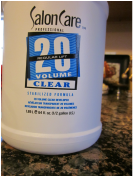
We used 6% ( also known as 20 Volume ) this was purchased at the Beauty Supply store as they use it in hair products.  (cosmetic purposes).

20-volume means that, when 1 volume of hydrogen peroxide is decomposed, it produces 20 volumes of oxygen.


What is Yeast?

Yeast, a microscopic, one-celled organism belonging to the group of organisms called fungi.

Yeasts are found in the soil, in water, on the surface of plants, and on the skin of humans and other animals. Like other fungi, yeasts obtain food from the organic matter around them; they secrete enzymes that break down the organic matter into nutrients they can absorb.

What is a Catalyst?

Catalysts work by providing a place where reactants can come together to react.

Why use Yeast as a Catalyst?

Cells in yeast and other organisms contain a catalyst called catalase. Through normal cell processes, living things produce hydrogen peroxide in their cells. But hydrogen peroxide is a poison so the cells need a way to break it down very quickly. Cells contain catalase, which breaks down hydrogen peroxide at a very fast rate. A single molecule of catalase can catalyze the breakdown of millions of hydrogen peroxide molecules every second.

Procedure:

1)    Place the soda bottle in the middle of the tray and put the funnel into the opening

2)    Pour 1 Tablespoon of Yeast into a cup and add 3 Tablespoons of warm water and stir – set aside

3)    Pour ½ cup of Hydrogen Peroxide into the bottle

4)    Pour 1 tablespoon of Dishwashing liquid into bottle and swirl to mix

5)    Choose Food Coloring Color of Choice and add 4 drops of color in total to drip down the inside of the bottle.

6)    Now add the Yeast mixture

7)    Remove Funnel

8)    Step back and enjoy!
Picture
Picture

Did you think this was cool?

We call it Tusker (Elephant) Toothpaste only because what happens in the bottle looks like enough toothpaste for an elephant to use!

A small amount of Hydrogen Peroxide generates a large volume of oxygen,   so when the catalyst of Yeast is added, which contains catalase, the liquid begins to break down very quickly and reacts with the oxygen and starts to quickly push out of the container.

The liquid soap is used ONLY to trap the oxygen that is released and the bubbles then turn to foam – make is easier to view the experiment

Oxygen quickly leaves the container causing strong foam so it erupts out of the top of the bottle. This foamy substance is caused by RAPID decomposition of Hydrogen Peroxide.


Picture

About Author 1

Small blurb about each one, add or remove columns depending on size of team

About Author 2

use humor, pictures, whatever you want
Powered by Create your own unique website with customizable templates.