A Unique Hands On Science Night
  • Home
    • Hands-On Science Night!
    • Preparing for Science Night >
      • Getting Started -1/06/12
      • Experiments Showcase - 1/13/12
      • How to Submit a Proposal - 1/20/12
      • Searching for Experiments - 1/27/12
      • Submitting Proposal - 2/6/12
      • Project Review - 2/10/12
      • Past Science Night Experiments >
        • Science Night 2014 >
          • Biology >
            • You Eat With Your Eyes First
          • Chemistry >
            • Rapid, Rainbow, Bounce
            • Homemade Hand Warmers
            • Enviro Power
            • Electric Gas
            • GLUEP
            • Blowing Up Balloons with CO2
            • Tusker Toothpaste
            • Balloon Experiments
            • Elephant Toothpaste
            • The Secret of Diapers
            • Super Absorbent Crystals
          • Physics >
            • Rainbow Milk
            • The Amazing Static Balloon
            • Bubbling Lamps of Lava
            • The Floating Egg
            • Marshmallow Cannon
            • Dry Ice Bubbles
            • Fog Tornado
            • Fun with Electromagnets
            • Poke that Polymer
            • The Square Bubble
            • Lava Lamps
            • How to Make an Egg Float
            • Super Can Crusher
            • How to Make a Homemade Lava Lamp
            • Monster Bubble
            • Levitating Orb
            • Magical Egg Bottle
            • Power of the Metal
            • Dry Ice Bubbles
            • Lava Lamps
            • The Screaming Balloon
            • Dancing Craisins
            • Colorful Densities
            • Color Separation
            • Center of Gravity
        • Science Night 2013 >
          • Biology >
            • Sensory Analysis
            • Sweet Polymers
          • Chemistry >
            • Awesome Bubbles
            • Balloon Expansion
            • Breaking Up Molecules
            • Bubble Up
            • Cabbage Chemistry
            • Color Explosion
            • Colored Bubbles
            • Fizz Inflator
            • Fool's Gold
            • Glowing Water
            • Gooey Gluey Slime
            • Holly and Jennie's Lava Lamp
            • Light Up
            • Making Bubbles
          • Earth Sciences >
            • Colorful Convection Currents
            • Ice Ice Baby
          • Physics >
            • Boo Bubbles
            • Bouncing Sounds
            • Can Crushers
            • Candle Vacuum
            • Candy Fizz
            • Colors of Light
            • Floating Paper Clip
            • Levitating Orb
            • Magical Bottle
            • Rainbow Density
            • Ready, Set, ... Throw!
            • Sink or Float?
            • Surface Tension
          • Technology >
            • Air Vortex Cannons
            • Chip Ship Challenge
            • Lemon Power
            • Wing Or No Wing?
        • Science Night 2012 >
          • Projects >
            • Chemistry >
              • Electrolyte Challenge
              • Homemade Hand Warmer
              • Elephant Toothpaste I
              • Tusker Toothpaste
              • Elephant Toothpaste III
              • Tasty Frozen Science
              • Purple Cabbage and Bases and Acids
              • Rainbow Milk
              • Pop Rocks and Soda
            • Science Night 2015 >
              • Chemistry >
                • Team 1
                • Team 3
                • Team 5
                • Team 6
                • Team 10
                • Team 11
                • Team 12
                • Team 13
                • Team 14
                • Team 19
                • Team 23
                • Team 30
                • Team 31
                • Team 32
                • Team 34
                • Team 35
                • Team 36
                • Team 37
                • Physics >
                  • Team 4
                  • Team 7
                  • Team 8
                  • Team 9
                  • Team 15
                  • Team 16
                  • Team 17
                  • Team 18
                  • Team 20
                  • Team 24
                  • Team 29
                  • Team 33
                  • Team 38
                  • Team 44
                • Team 39
                • Team 41
                • Team 42
                • Team 43
                • Team 45
                • Team 48
              • Technology >
                • Team 21
                • Team 26
                • Team 40
                • Team 47
              • Biology >
                • Team 2
                • Team 22
                • Team 28
                • Team 27
                • Team 46
            • Engineering and Technology >
              • World's Simplest Motor
              • Magnetic Levitation Train
            • Physics >
              • Water Filter
              • Stacking Liquids
              • Egg in a Bottle
            • Biology >
              • Infected!
      • A Helpful Presentation Board - 2/10/12
      • Hands-On all the way - 2/17/12
      • Practice, Practice , Practice - 3/02/12
      • More Practice 3/2/12
      • Rehearsal Afternoon - 3/15/12
    • passports
    • teaminfo
  • Run your own Science Night
  • Who are we?
  • Science Night 2016
    • Chemistry >
      • Team 2
      • Team 4
      • Team 5
      • Team 7
      • Team 13
      • Team 14
      • Team 15
      • Team 16
      • Team 18
      • Team 20
      • Team 21
      • Team 27
      • Team 28
      • Team 31
      • Team 32
      • Team 33
      • Team 34
      • Team 35
      • Team 36
      • Team 40
    • Physics >
      • Team 1
      • Team 3
      • Team 6
      • Team 9
      • Team 11
      • Team 17
      • Team 19
      • Team 22
      • Team 23
      • Team 24
      • Team 25
      • Team 26
      • Team 29
      • Team 30
      • Team 37
      • Team 38
      • Team 42
      • Team 43
      • Team 44
    • Technology >
      • Team 12
      • Team 39

Amplified Oobleck

Question: Which amount of vibration, specifically Hertz levels from an amplifier playing music will cause the most movement/dancing in the non-newtonian fluid when it is placed on the amplifier? 


Hypothesis: We  think the non-newtonian fluid will react/move the most when the music is a loud bass vibration. We think this because the bass gives out the most concentrated vibration out of all of the three music sounds played including mid range and treble because of the pressure of the Hertz levels of Bass.


Picture
Our Experiment

Materials: 

Picture
Materials
Corn Starch, Water, Bowl
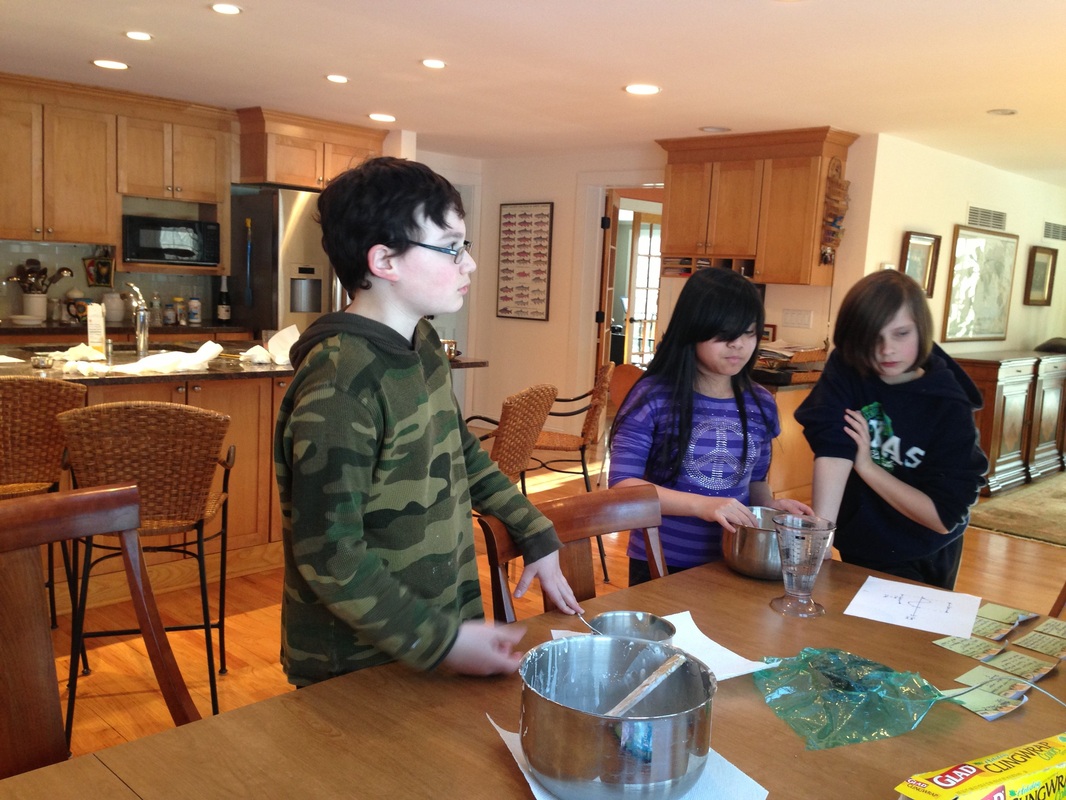
Spoons, Measuring cups, paper towels, saran wrap, amplifier, electrical outlet and extension cord, masking tape, smocks, hand wipes, and garbage bags.  Three small bowls and three spoons for attendees.


Safety Procedures

Inform participants that the solution may stain clothes so please wear smock.  Keep solution at table.
Material 1: Do not eat the cornstarch solution, do not throw or get it in eyes on face. Do not put oobleck down sink.
Material 4: No water near the electricity or amplifier.

Procedure:

Detail steps so anyone can reproduce this at school or home
Use a numbered list
  1. Measure approximately 1.5 cup cornstarch and put in bowl
  2. Measure and slowly add about 1 cup water
  3. Mix till thick consistency
  4. Tape saran wrap on the speaker of the amplifier.
  5. Place  a spoonful of the non Newtonian fluid on the saran wrap
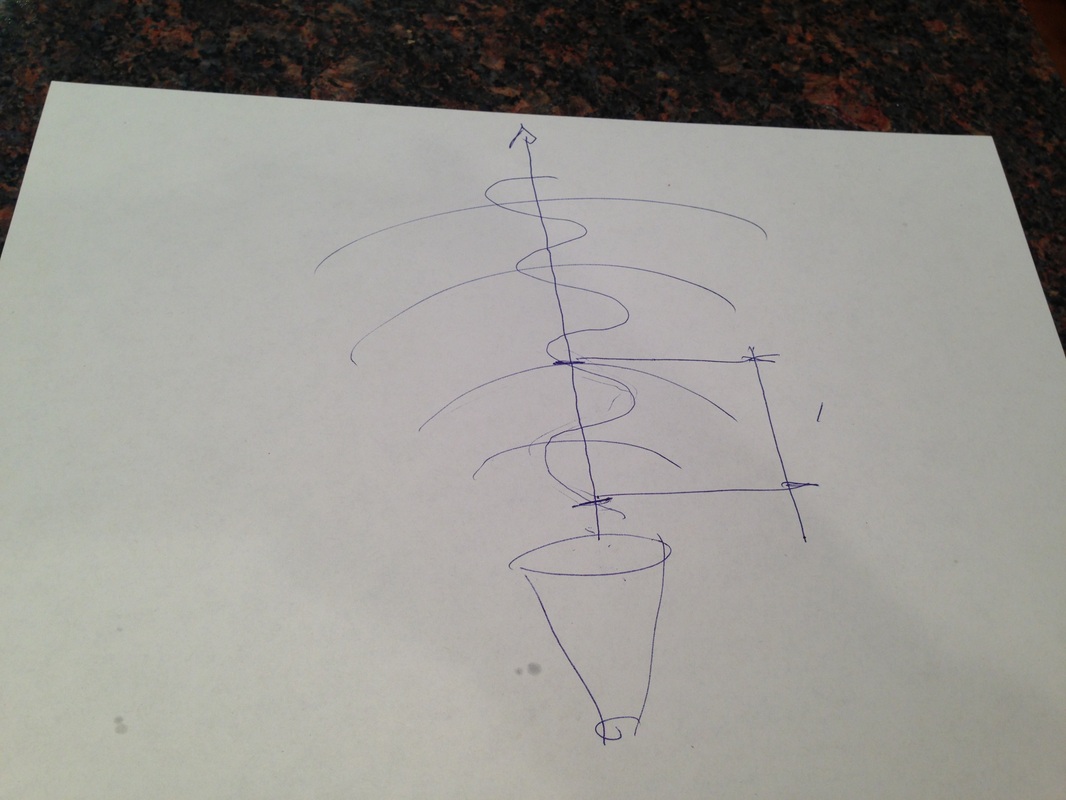
  6. Turn on the amp and music and use Hertz as measurement of pressure.  
  7. Put song on with just bass 
  8. Put song with treble and mid Hertz levels on
  9. Make note of movement/reaction of fluid with each sound/vibration change in Hertz.


Special Needs:
Electricity/sink
Quiet Room, music from amplifier is loud and may disturb other experiments.


Picture
Picture

The Science behind it


Non-Newtonian fluids change their viscosity or flow behavior under stress. If you apply a force to such fluids (say you hit, shake or jump on them), the sudden application of stress can cause them to get thicker and act like a solid, or in some cases it results in the opposite behaviour and the molecules may loosen and become more of a liquid than they were before. If you remove the stress (let them sit still or only move them slowly) they will return to their earlier state.

One non-newtonian fluid called Oobleck is a suspension of cornstarch and water that can behave like a solid or a liquid depending on how much pressure you apply. Oobleck is a suspension, not a solution. The cornstarch does not dissolve in the water like salt or sugar would. Instead, the tiny starch particles are suspended in the liquid. If you let it sit long enough in a glass, the cornstarch will settle to the bottom leaving a layer of clear water on the top.

The most generally accepted explanation for the behavior of Oobleck is offered by Cary Sneider in “Oobleck: What do Scientists Say?”. When sitting still the granules of starch are surrounded by water. The surface tension of the water keeps it from completely flowing out of the spaces between the granules. The cushion of water provides quite a bit of lubrication and allows the granules to move freely. But, if the movement is abrupt, the water is squeezed out from between the granules and the friction between them increases rather dramatically.

When a fluid’s viscosity is constant it is referred to as a Newtonian fluid. Oobleck is an example of a fluid whose viscosity is not constant, it changes depending on the stress or forces applied to it. If you poke it with your finger and apply a large force, it becomes very viscous and stays in place. If you gently pour it, applying little force, it will flow like water. This kind of fluid is called a dilatant material or a shear thickening fluid. It becomes more viscous when agitated or compressed


Conclusions

In conclusion, the bass made the oobleck dance the most.  We learned that the closer the oobleck is to the speaker/pressure the more the oobleck will dance. It danced the most to the bass frequency which is 20 to 400 Hertz ranges.  Rock and Roll music made it dance the most because of the loud and frequent bass vibrations.  We first placed and observed water on the saran wrapped speaker and tested all music levels and the water vibrated the same with all Hertz levels bass, midrange and treble.  The oobleck molecules piled together to bass only.  


Nathan


Brunon


Charlotte


Powered by Create your own unique website with customizable templates.